
SMS vs. Email vs. Voice: Best Channels for Insurance Lead Outreach
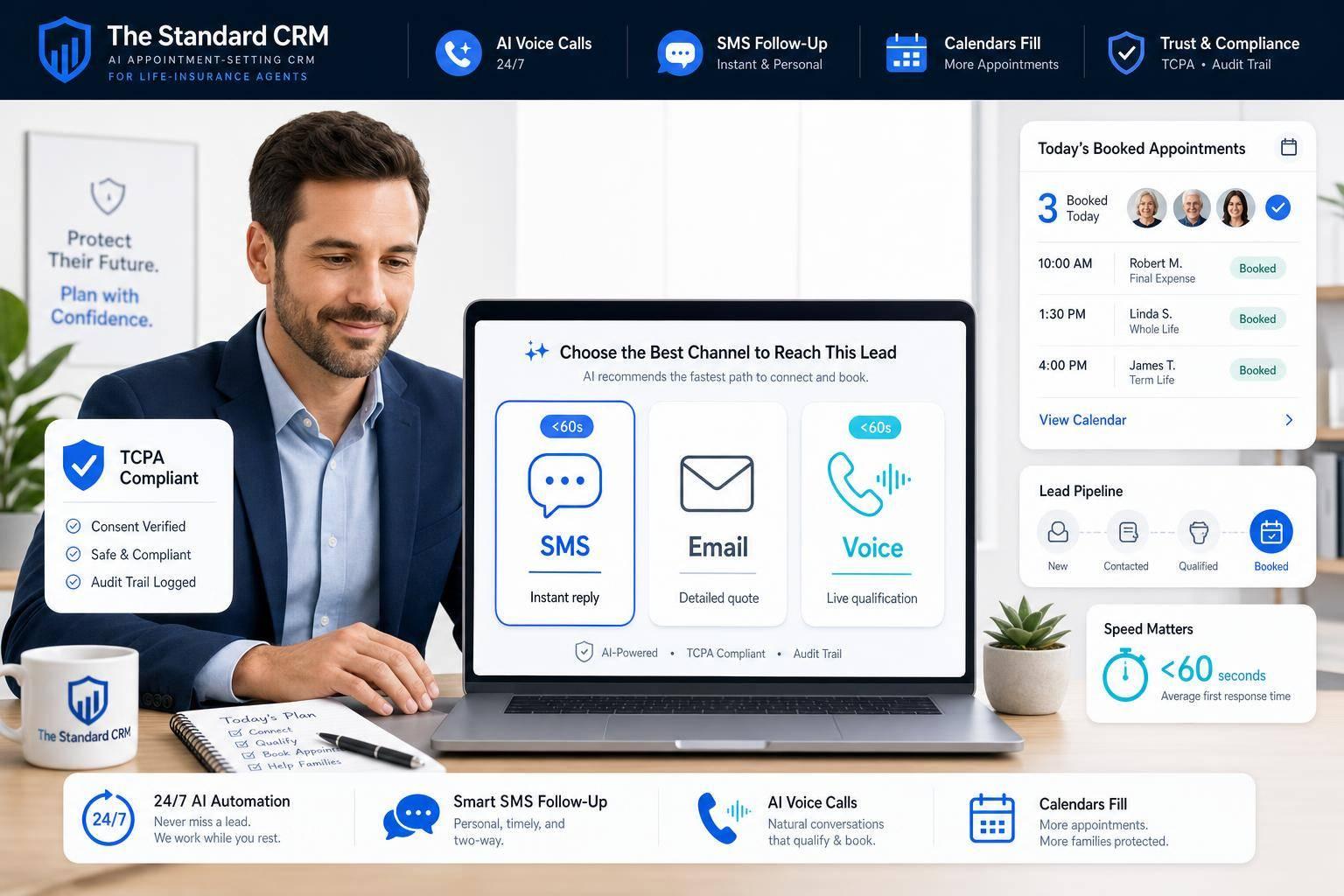
If I want more insurance leads to reply, I don’t pick one channel and hope for the best. I use SMS for fast first contact, voice for live qualification and booking, and email for quotes, details, and records.
The data is clear: replying within 1 minute can lift conversions by 391%, and agents who respond within 5 minutes are up to 21x more likely to qualify a lead than those who wait 30 minutes. On top of that, a mix of phone, text, and email can push contact rates to 65%–80%, compared with 50%–65% for phone-only outreach.
Here’s the short version:
- SMS works best for immediate follow-up, short questions, and reminders
- Email works best for quotes, comparisons, disclosures, and written follow-up
- Voice works best for high-intent leads, objection handling, and appointment booking
- Best first step depends on lead stage
- Web-form lead: start with SMS
- Consultation request: start with voice
- Appointment confirmation: use SMS + email
- Cold lead reactivation: use SMS → email → voice
- Compliance matters at every step
The main point is simple: I match the channel to the lead’s intent, timing, and consent status. That helps me move fast without creating legal problems or wasting follow-up.
Text Messaging Your Life Insurance Leads For Appointments?
sbb-itb-b54a2b8
Quick Comparison
| Channel | Best For | Reply Speed | Main Limit | Key Rule |
|---|---|---|---|---|
| SMS | First contact, reminders, short follow-up | Seconds to minutes | Tight consent rules | TCPA + 10DLC + opt-out |
| Quotes, details, nurture, records | Hours to days | Lower urgency | CAN-SPAM | |
| Voice | Qualification, objections, booking | Instant if answered | Many calls go unanswered | TCPA + DNC + recording laws |
If I keep that simple channel order in mind, the rest of the outreach process gets much easier to run.
SMS vs. Email vs. Voice: Strengths, Limits, and Compliance Rules
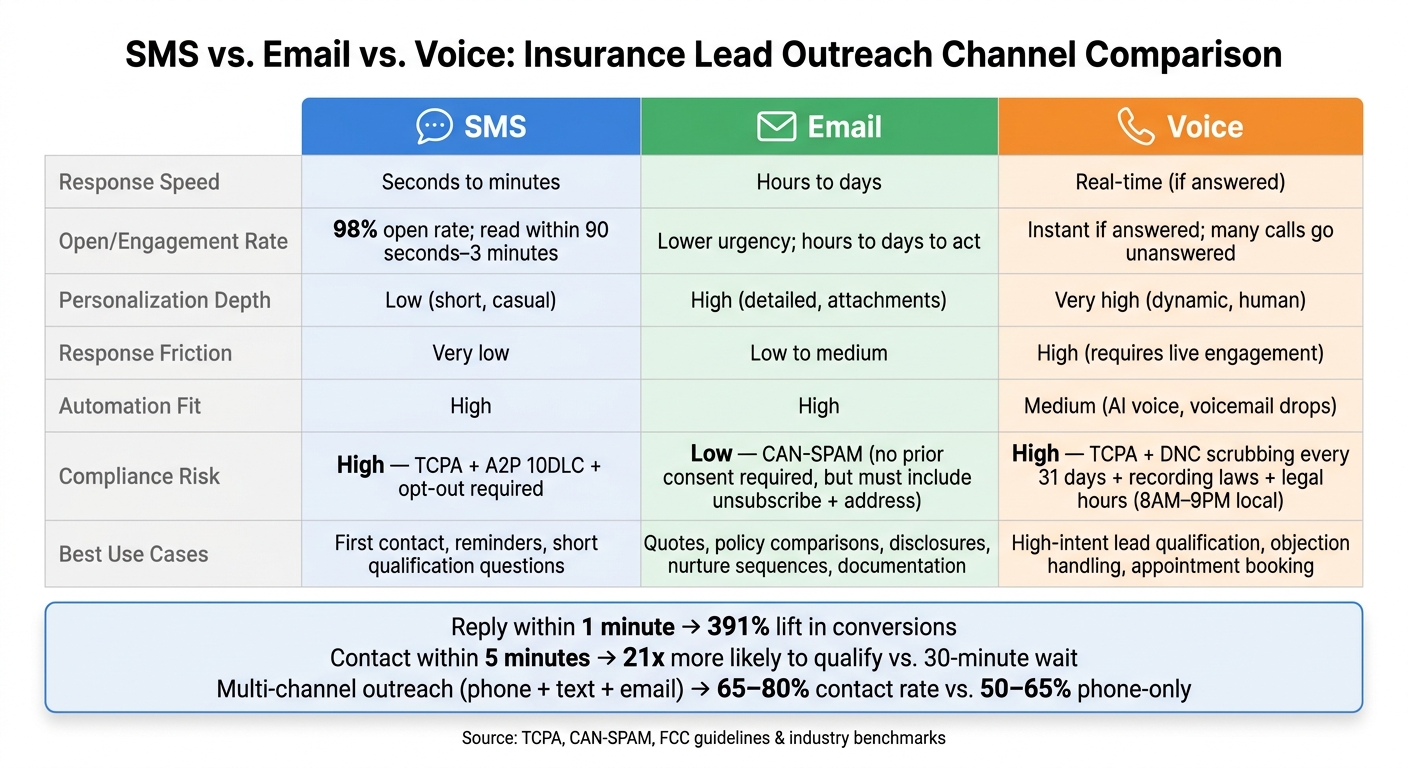
SMS vs. Email vs. Voice: Insurance Lead Outreach Channel Comparison
Each channel fits a different moment in the lead journey. If you rely on just one - or blast all three at the same time - you can hurt response rates. The better move is simple: match the channel to lead intent, urgency, and compliance rules.
| Factor | SMS | Voice | |
|---|---|---|---|
| Response Speed | Seconds to minutes | Hours to days | Real-time (if answered) |
| Personalization Depth | Low (short, casual) | High (detailed, attachments) | Very high (dynamic, human) |
| Response Friction | Very low | Low to medium | High (requires live engagement) |
| Automation Fit | High | High | Medium (AI voice, voicemail drops) |
| Compliance Risk | High (TCPA/10DLC) | Low (CAN-SPAM) | High (TCPA/DNC/recording laws) |
| Best Use Case | First contact, reminders, short qualification | Quotes, nurture, documentation | Qualification, objection handling, booking |
The table lays out the tradeoffs. Here’s how each channel tends to work in practice.
SMS: Fast Replies and Low-Friction Follow-Up
Use SMS when the lead is warm, the message is short, and timing matters. SMS has a 98% open rate, and most messages are read within 90 seconds to 3 minutes of delivery. That makes it a strong option for quick acknowledgment, short qualification questions, and appointment reminders.
There’s a catch: SMS comes with tight rules. Marketing texts to cell phones require prior express written consent, A2P 10DLC registration, and a clear opt-out on every message.
If the lead needs more detail - or simply wants something in writing - email is usually the next step.
Email: Detailed Nurture and Documentation
Use email when the lead needs context, side-by-side comparison, or a paper trail. It works well for quotes, comparisons, disclosures, and nurture sequences.
CAN-SPAM sets the base rules: prior consent is not required, but every marketing email must include a physical mailing address, a clear unsubscribe link, and an easy way to process removal requests within 10 business days. Deliverability also depends on proper SPF and DKIM records. In some states, including California, Texas, and Florida, agents may also need to include their insurance license number in email signatures.
When the goal shifts from sending details to having a live back-and-forth, voice becomes the better fit.
Voice: Real-Time Qualification and Appointment Booking
Use voice when the lead is ready to talk live. A live call - or an AI-assisted one - is still the strongest channel for moving a high-intent lead forward. It gives you room to ask follow-up questions on the spot, handle objections right away, and book an appointment before the call ends. The downside is simple: calls from unknown numbers often go unanswered.
Voice also carries strict legal rules. Automated calls to cell phones require prior express written consent. You also need to scrub against the DNC registry every 31 days, call only during legal hours (8:00 AM–9:00 PM in the prospect's local time zone), and follow state recording-consent rules. Ignore those rules and the cost can add up fast, with TCPA violations running $500 to $1,500 per non-compliant call.
With those tradeoffs in view, the next move is to line up each channel with the right lead stage.
Which Channel Works Best at Each Lead Stage
Lead stage should shape channel choice. Different channels do different jobs, so the best move depends on where the lead is in the process.
| Lead Stage | Best Channel | Why It Works |
|---|---|---|
| First contact (web-form lead) | SMS | Low-friction reply path that works well for immediate follow-up |
| First contact (high-intent consultation request) | Voice | High intent; call within minutes to qualify while interest is still warm |
| Appointment confirmation | SMS + Email | Text for speed, email for calendar details |
| Appointment reminder (24 hrs out) | SMS | Faster than email and well suited for reminders |
| Quote delivery or policy comparison | Best for attachments, disclosures, and documentation | |
| Re-engaging cold or unresponsive leads | SMS → Email → Voice | A structured three-touch sequence works better than a single blast |
| Re-engaging long-dormant leads | Use a final soft-touch email, then move the lead to quarterly nurture if there's still no response |
First Contact and Early Follow-Up
Agents who contact a lead within five minutes are up to 21x more likely to qualify them than those who wait 30 minutes. That gap is huge. A web-form lead usually responds best to an automated text sent within 60 seconds. It confirms the form went through, sets the next step, and gives the lead an easy way to text back.
If the person submitted a high-intent consultation request, call them first. A call within 2–5 minutes makes the most of that short warm window. Then send a same-day email with next steps and disclosures.
After the lead replies, shift into booking and confirmation.
Appointment Setting and Reminder Workflows
SMS works well for confirmations because it’s fast and hard to miss. Email handles the details better, especially when you need to send calendar info or other written follow-up.
For more involved cases, a phone call before booking can help sort things out early. It gives the agent a chance to qualify the lead, answer questions, and set clear expectations before the appointment is locked in. A simple flow works well here: call first when the case is complex, confirm by text, and send the full details by email.
Re-Engaging Cold or Unresponsive Leads
When a lead goes quiet, the job changes. At that point, speed matters less than steady follow-up. Instead of sending one big blast and hoping for the best, use a three-touch sequence: Day 1 text, Day 3 email, Day 5 call. Then pause for 7–10 days before sending a final close-your-file email. That last message often gets a response.
Agents have a 60–70% chance of converting a past contact compared to just 5–20% with a brand-new lead. That’s why old leads are worth another shot, especially when the follow-up feels organized instead of random.
How to Build a Compliant Multi-Channel Outreach System
Once you know the best channel, the next move is simple: send leads through an automated system that changes based on response and consent.
A Simple Framework for Choosing the Right Channel
Use SMS when speed matters, email when you need room to explain, and voice when live qualification makes the most sense.
Lead source also tells you a lot about intent. Referrals usually need fewer, more personal touches. Paid leads often need fast follow-up across more than one channel. Organic leads tend to respond better to a lighter nurture flow.
Automation Workflows Inside The Standard CRM
After you pick the channel mix, build workflows that escalate only when the lead stays silent.
The Standard CRM starts sequences the moment a lead enters the system. The basic flow is clear: send an SMS confirmation right away, follow with an email shortly after, then queue a producer call task for the agent.
What matters most is behavioral branching. If a lead replies to a text, books a call, or opens a high-intent email, the automation should pause at once and alert the agent to step in.
The Standard CRM's AI voice agent handles inbound and outbound calls 24/7. It qualifies leads and schedules appointments directly on agent calendars, with a brief attached.
Compliance Controls Agents Should Not Skip
Every agent should have four controls in place:
- Consent capture: Store the consent timestamp, the source URL, the disclosure snapshot, and a TrustedForm or Jornaya token for every lead. New FCC rules require one-to-one consent, which means your lead form must name your agency directly, not just "marketing partners".
- 10DLC registration: All business SMS in the U.S. must be sent through a registered 10-digit long code. If not, messages can be filtered or blocked.
- DNC scrubbing: Scrub against federal and state Do Not Call registries every 31 days, and scrub again before any new campaign. Also check reassigned number databases, since consent follows the current subscriber, not the original lead.
- Opt-out propagation: When a lead texts STOP or unsubscribes from email, update suppression lists right away so SMS and voice are honored within 24 hours, and email opt-outs are honored within 10 business days.
Consent logs, opt-outs, and call records should be tracked automatically. That helps keep outreach inside legal calling hours and makes sure contact stops when a lead opts out. When consent, timing, and routing live inside the CRM, agents can move fast without things getting messy.
Conclusion: Match Your Outreach Channel to Lead Intent and Timing
No single channel works best at every step. SMS gets attention fast. Email gives you room to explain things and leaves a paper trail. Voice is where live conversations happen and where deals often move forward.
The best channel depends on where the lead is in the process: first contact, follow-up, appointment setting, or re-engagement. That’s why top performers don’t lean on just one option. They line up phone, text, and email based on lead stage and use each one when it makes the most sense.
A coordinated mix of phone, text, and email can produce contact rates of 65–80%. That matters because a multi-channel sequence gives agents more chances to stay in front of a lead long enough to convert.
The teams that do this well blend speed, persistence, automation, and compliance. Automation can handle the first move, then a live agent can step in for qualification or booking when the timing is right. A simple rule works well here: match the channel to intent, let automation start the outreach, and switch to voice when the lead is ready to talk.
FAQs
How do I choose the first outreach channel?
Start with SMS if you want speed and the best shot at a fast reply. Calls still work best for longer talks and closing deals, but text often wins for that first touch.
For better results, use a multi-channel sequence: send a text right away, place a call soon after, then follow with an email for context and credibility.
When should I use more than one channel?
Use multiple channels if you want better response rates, want to meet people where they are, and need both speed and depth in your outreach. Sticking to a single channel can shrink your reach and leave good leads untouched.
Use SMS when timing matters and you need fast attention. Use email when you have more to say, need to share context, or want to keep the conversation going over time. Use voice calls when you need to qualify a lead, answer questions on the spot, and build a more personal connection.
When you combine all three, you stay in front of prospects at different points in the buying cycle without relying on just one way to get through.
What consent do I need before texting or calling?
Before you text or call insurance leads, you need consent that meets TCPA rules and wireless carrier standards.
For marketing calls or texts, get Prior Express Written Consent. And don’t just get it - keep your own proof. That means saving the disclosure text and the timestamp.
For purely informational messages, Prior Express Consent is usually enough. But there’s a catch: if the message includes any promotional content, it counts as marketing. And once that happens, written consent is required.